
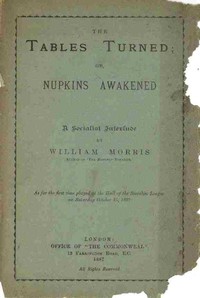
The Tables Turned; or, Nupkins Awakened. A Socialist Interlude by William Morris
William Morris is best known for his beautiful wallpaper and textile designs, but he had another, fiercer passion: socialism. 'The Tables Turned' is where that passion hits the stage. Written in the 1880s, it's a short, sharp play meant to be read aloud or performed, capturing a moment of political clash with wit and purpose.
The Story
The plot is straightforward but charged. Several socialists, including a charismatic figure named John, are hauled before a magistrate named the Honourable Mr. Nupkins for the crime of 'obstruction'—basically, preaching revolution in a public park. Instead of pleading for mercy, they turn the tables. They use the courtroom as their platform, questioning the very foundations of the law, property, and justice that Nupkins represents. The 'trial' becomes a series of speeches where the defendants explain the failings of industrial capitalism and their vision for a better society. Nupkins, a perfect symbol of blinkered authority, squirms and blusters, completely unable to engage with their arguments on any level except outrage.
Why You Should Read It
Don't go in expecting a nuanced novel. This is a polemic, a piece of political theater. Its power comes from its directness and its almost cheeky confidence. Reading it, you can feel the energy of a movement finding its voice. Morris isn't trying to hide his message in metaphor; he's having his characters state it plainly, passionately, and publicly. It’s fascinating as a historical document, showing exactly how these ideas were communicated. But it's also weirdly invigorating. There's a pure, cathartic joy in watching the underdogs school the powerful in their own house, using reason as their only weapon. The character of Nupkins is a brilliantly drawn comic villain—you'll recognize his type immediately.
Final Verdict
This is a perfect bite-sized read for anyone curious about the roots of socialist thought, fans of sharp political satire, or readers who enjoy seeing historical debates play out in real time. It's for people who like their literature with a strong point of view. You'll blast through it in under an hour, but it might stick with you for a lot longer. Think of it less as a traditional story and more as a captured moment of protest—a snapshot of a heated argument from 140 years ago that still echoes today.
This historical work is free of copyright protections. Access is open to everyone around the world.
Betty Thompson
6 months agoSimply put, it creates a vivid world that you simply do not want to leave. Don't hesitate to start reading.
Brian Davis
1 year agoAmazing book.
Donna Davis
2 years agoI started reading out of curiosity and it provides a comprehensive overview perfect for everyone. Absolutely essential reading.
John Martin
1 year agoI started reading out of curiosity and the flow of the text seems very fluid. Truly inspiring.
Noah Anderson
5 months agoI stumbled upon this title and the emotional weight of the story is balanced perfectly. Don't hesitate to start reading.