
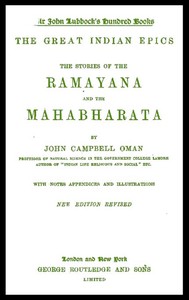
The Great Indian Epics : The Stories of the Ramayana and the Mahabharata by Oman et al.
Let's be honest, the Ramayana and Mahabharata are colossal. This book acts as a brilliant guide, condensing their essence into a clear and compelling narrative without losing the soul of the stories.
The Story
The book is split into two parts. First, the Ramayana follows Prince Rama, who is exiled to the forest for 14 years. His wife Sita and brother Lakshmana join him. The central conflict ignites when the demon king Ravana kidnaps Sita. The story becomes Rama's monumental quest to rescue her, aided by an army of monkeys and the mighty Hanuman. It's a classic tale of good versus evil, but layered with themes of duty, sacrifice, and honor.
The Mahabharata is even more complex. It centers on a bitter feud between two sets of royal cousins, the Pandavas and the Kauravas, over the throne of Hastinapura. This disagreement explodes into an apocalyptic war on the field of Kurukshetra. The heart of this story is the Bhagavad Gita, a profound conversation between the warrior Arjuna and his charioteer, the god Krishna, about life, duty, and righteousness, spoken on the battlefield just as the war begins.
Why You Should Read It
I loved this book because it made these ancient epics accessible and emotionally resonant. These aren't just myths; they are intense human dramas. You feel for Sita's strength in captivity, you understand Arjuna's paralyzing doubt before fighting his own family, and you see the tragic consequences of pride and ambition in the Kauravas. The characters are flawed, make tough calls, and face real consequences. Reading it, you get a deep sense of the moral and philosophical questions that have preoccupied people for millennia: What is the right thing to do when all choices are bad? What is true duty? The storytelling is straightforward and focused on the plot and characters, which makes it a page-turner.
Final Verdict
This book is perfect for anyone new to Indian mythology who wants a captivating entry point. It's also great for readers who enjoy epic fantasy or historical fiction, as these stories are the original blueprint for grand narratives about war, honor, and destiny. If you're looking for a deep academic analysis or the complete, unabridged verses, this isn't it. But if you want to understand the core stories, fall in love with the characters, and be swept up in two of the greatest tales ever told, this retelling is absolutely fantastic. It turns intimidation into fascination.
This work has been identified as being free of known copyright restrictions. Preserving history for future generations.




Michelle Brown
1 year agoHonestly, the arguments are well-supported by credible references. I would gladly recommend this title.