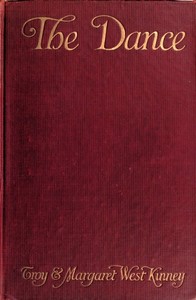
The Dance: Its Place in Art and Life by Troy Kinney and Margaret West Kinney
Published in 1914, 'The Dance: Its Place in Art and Life' isn't a plot-driven novel. Instead, think of it as a grand, beautifully illustrated tour through the history of human movement. The Kinneys act as your guides, starting at the very beginning.
The Story
The book's 'story' is the story of dance itself. It begins with primitive humans, showing how dance was inseparable from life—used in rituals for rain, war, love, and worship. From there, we travel to ancient Egypt and Greece, where dance was central to drama and religion. We see it morph through the Middle Ages, sometimes suppressed, sometimes flourishing in folk traditions. The narrative then sweeps into the Renaissance courts, where social dances became elaborate displays of power and etiquette, eventually giving birth to professional ballet. Finally, it arrives at the authors' present day, examining the theatrical dance and popular ballroom styles of the early 20th century. The through-line is always the same: dance as a fundamental, powerful form of communication.
Why You Should Read It
I loved this book because it made the familiar strange and wonderful. I'll never look at a simple gesture or a night out dancing the same way again. The Kinneys write with a clear passion that's contagious. They connect dots I never considered, like how the structured patterns of court dances reflected the strict social hierarchies of the time. The book is packed with incredible photographs and drawings—from Cambodian temple dancers to diagrams of ballet positions—that make the history vivid and real. It reads less like a textbook and more like a series of fascinating conversations with very knowledgeable friends.
Final Verdict
This is a perfect read for curious minds who enjoy popular history or art books. If you liked 'A History of the World in 100 Objects' or 'The Story of Art', you'll appreciate this deep dive into a single, universal art form. It's also a treasure for dancers, theatre lovers, and anyone in the creative arts seeking inspiration from the roots of expression. Fair warning: it's a product of its time in some views, but as a foundational look at why we move, it remains utterly compelling. A true classic that gives you a whole new lens on the world.
This content is free to share and distribute. It is now common property for all to enjoy.